
Perspective: post-gender
Nothing is real! Well okay, some things are real... but not gender!

What number is that, there on the ground?
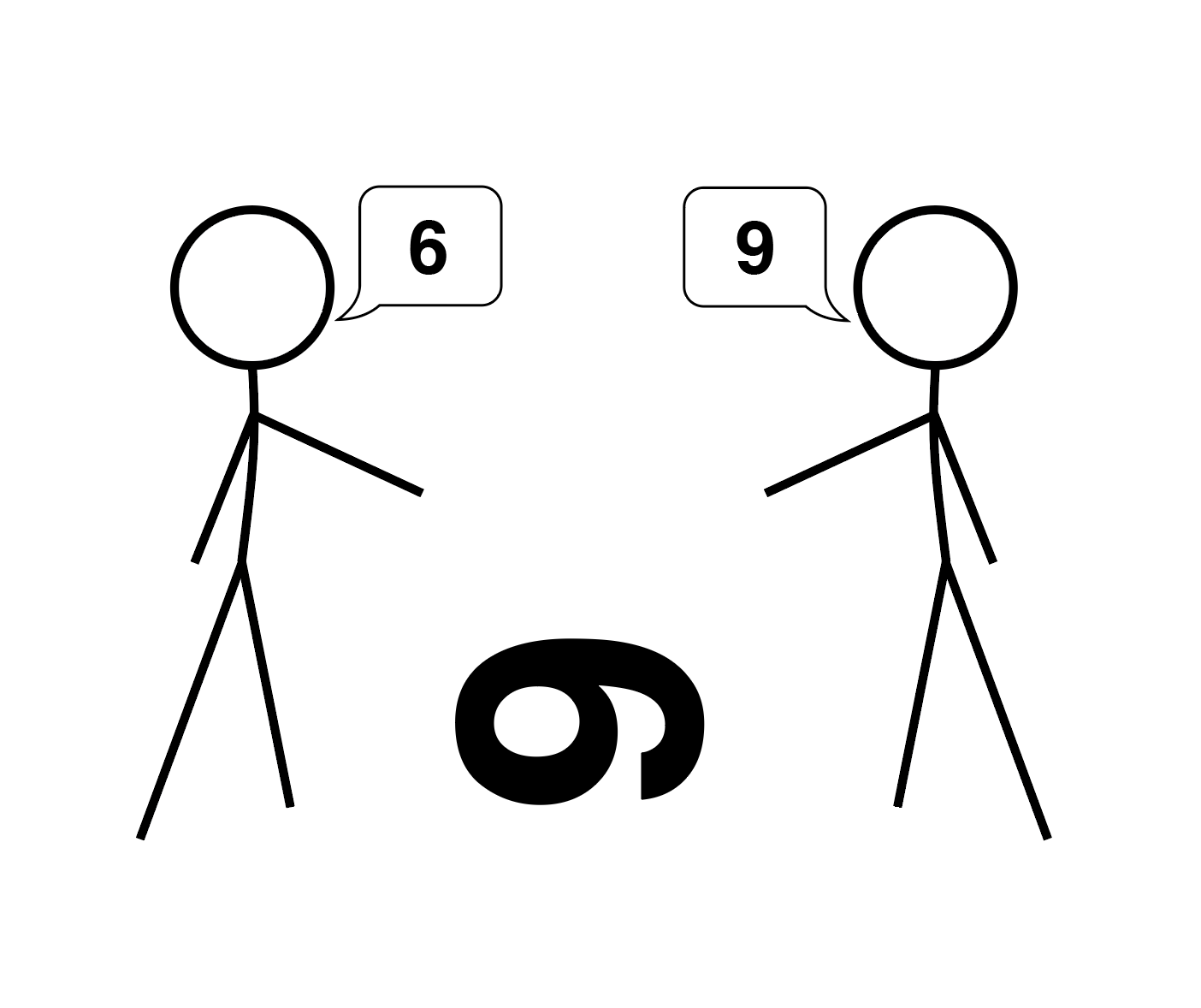
The first time I remember being exposed to this concept of falsely self-evident perspectives was in a short story from the book Chicken Soup for the Kid’s Soul, which I read through many times growing up. The story is called “Things Are Not Always Black Or White”, and culminates in the lesson “You must stand in the other person’s shoes and look at the situation through their eyes in order to truly understand their perspective.” The more I think about gender — not transition, not laws, not systems, but personal identity — the more I think this applies.
After many years of defining my identity through a lens of gender, I have decided I have an intellectual opposition to this concept. I call this perspective “post gender”, because I have given the literal concept of gender a very hearty try, and my rejection of it now is directly informed by that experience — for instance, I know that who I am, my sense of self, could not be changed based on the labels or medical treatments applied to my body. Due to this, when asked, I identify my gender as “none” (though I’d rather not be asked that at all).
Now, understand that I didn’t initially find community among LGBTQ+ folk for no reason at all; for various reasons the vast majority of people I am friendly with continue to be those who identify themselves as some flavour of LGBTQ+, and thus gender is something that comes up – especially if I am feeling brave enough to disclose my own transition experience. I have found this idea of having no gender near-impossible to explain to those who see identity through a lens of real and literal gender. “I don’t participate in gender” inevitably gets interpreted as “Oh, you’re agender”. I am not agender. I think there’s a subtle but important distinction there.
Consider the following analogy, about a similarly metaphysical subject:
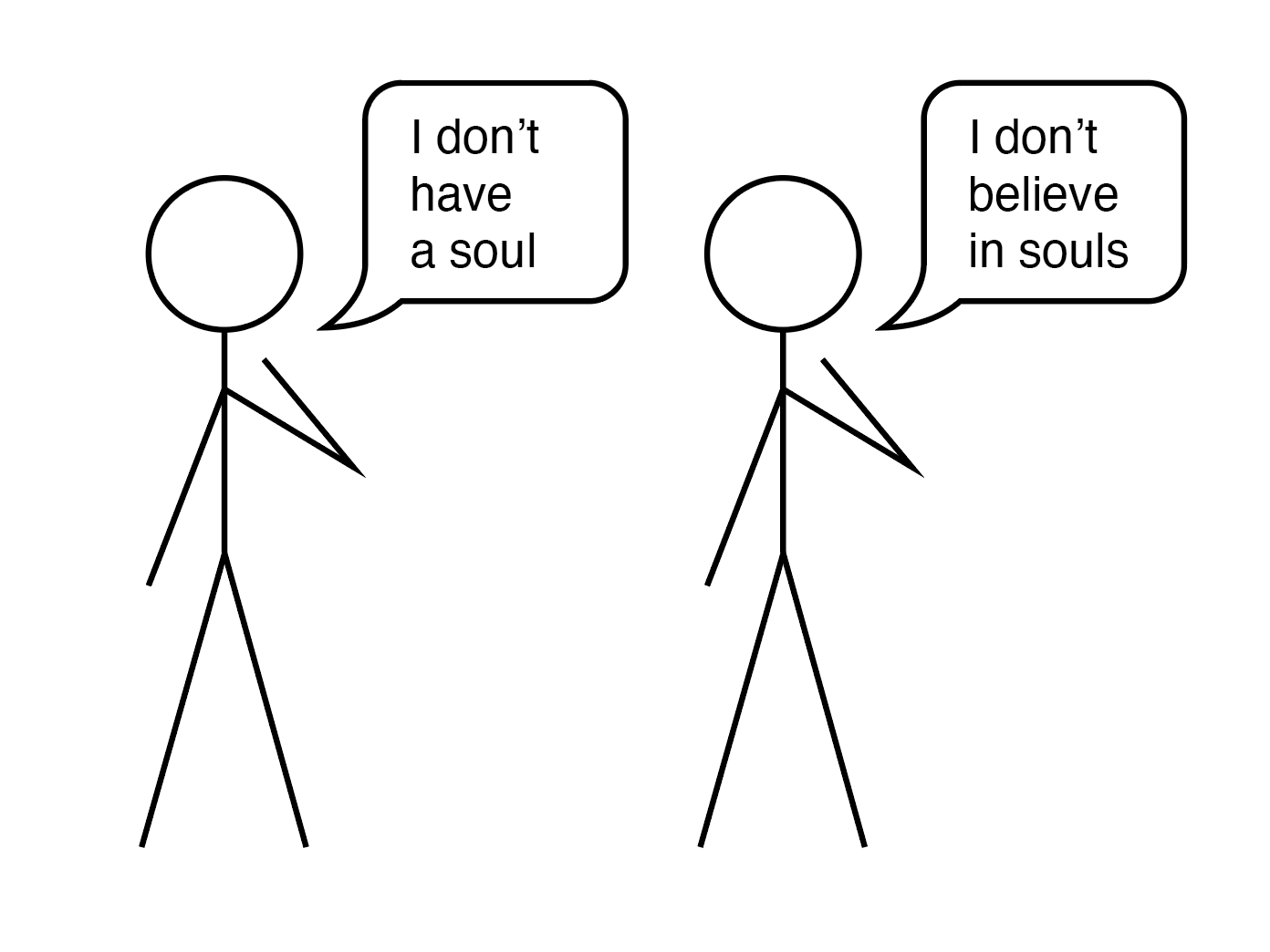
One of those people is making a statement about themselves — “I don’t have a soul” implies that, unlike this individual, others do (or might). The other person is making a general statement. We can extrapolate that they don’t believe they have a soul, because they do not believe that is something that exists for one to have. We can also assume that they do not believe they are unique in their lack of soul, and, in fact, that they feel it is the norm.
I feel that if I were to call myself agender, I would still be endorsing the concept of gender as real. I would not be removing myself from it, nor rejecting it; rather I’d still be defining my own identity along its terms — “my gender is that I, unlike others, do not have a gender”. Continuing from the above analogy, my post-gender perspective is more the latter — “I do not believe gender exists, and therefore I do not have one (which is unremarkable)”. My lack of gender actually says nothing about my relationship to traditional (Western) concepts of masculinity and femininity. It’s purely rejection of the idea that my identity should be pinned to or against those concepts. As I mentioned, though, this idea of pure rejection can be very difficult to get across to people who feel that gender is a fact of life. They cannot see that this is simply my perspective of the very same thing their own identity is based on.
So, I now understand ‘gender’, as an idea separate from sex, to be essentially analogous to gender roles, which I’ve established I think are meaningless. There are transgender people who see gender this way (ie. as gender roles) but who do feel those roles are meaningful to their personal identity. There are others whose concept of gender gets more into the realm of spiritual fantasy, imagining a self that is defined not by gender roles, but according to, for lack of a better word, vibes. I used to find this frustratingly illogical — and it’s not that I suddenly have adopted this worldview — but I have come to understand this as essentially a different perspective on my own understanding of reality. Although I think it’s nonsense, it is actually much more aligned to my own rejection of gender than the concept of ‘transgender’ traditionally assumes — see below.
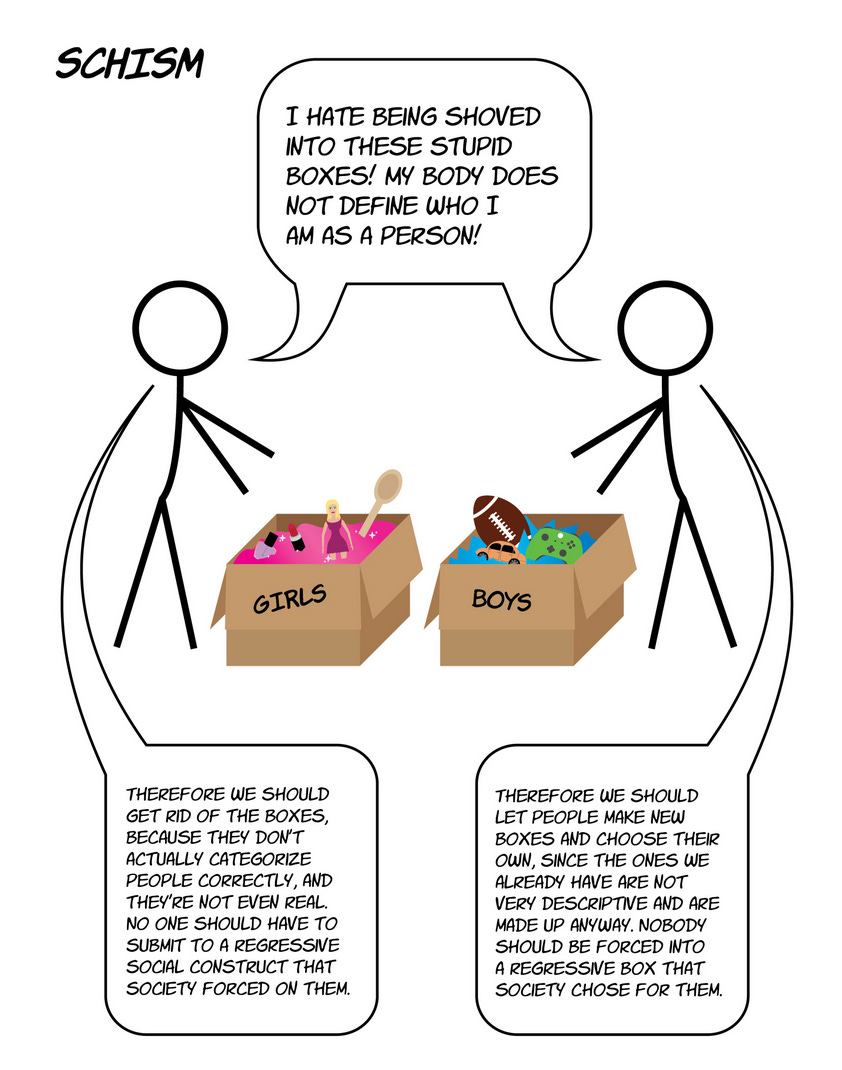
I could call myself nonbinary or agender, and I could justify it. I don’t do that, because I don’t feel a need to. I have been the same person, whether I called myself a girl, a boy, a man, or now a ‘woman’ (as society sees me, and as I consider myself due to my femaleness). Is that being nonbinary — agender — a sign I’m niether/nor? Or is it a sign that I am human, and that such labels are a false sense of how humans ought to be categorized? Depends on your perspective, I suppose.
I have seen another version of the “6 or 9” image that looks like the one below, and I like the message of that one much better. I like the idea that perspectives can vary based on our experiences, but we can still see how others might reach a different conclusion stemming from their own experiences. Maybe that’s as close to truth, or ‘reality’, as we can get. I wish so badly that the societal dialogue could recognize these perspectives on gender as more aligned than not. I truly believe they are!
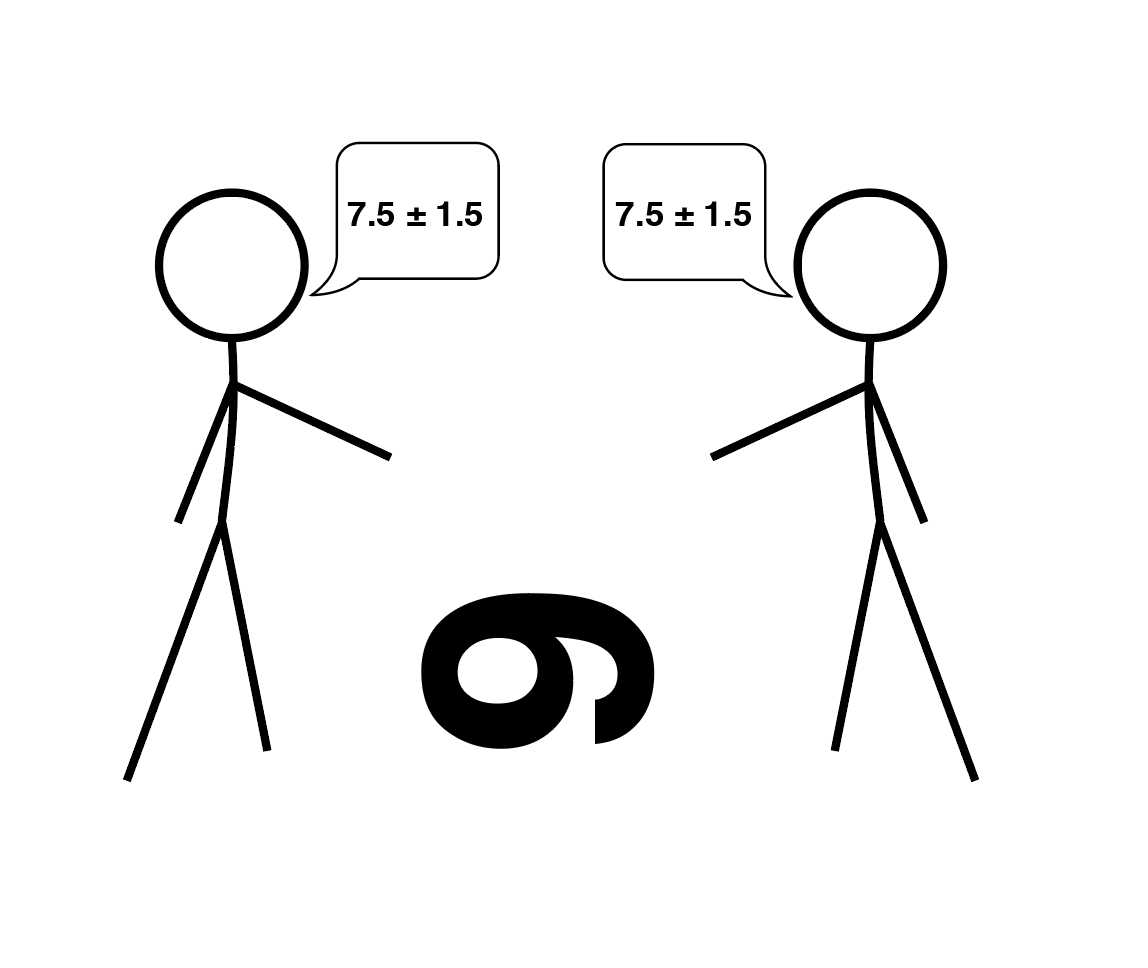
Is the answer “7.5 ± 1.5” a bit clunky, overly-diplomatic, a good deal less satisfying than a pure 6 or 9? Certainly. But the world is clunky; reality is largely in the meaning we make of it, and if we value truth or accuracy in any way, I certainly think there’s merit in understanding how others might logically interpret the world in ways we ourselves do not. I long for a world where perspectives about gender can be flexible enough that those who do not see eye-to-eye can still have a meaningful, respectful, intellectually stimulating discourse.
Thank you for another great piece. You present your perspectives with clarity and humor (and the graphics rock, too!) I long for that same world.
It is an interesting piece (and I like the pictures, especially the box ones), but I feel this picture doesn't address the elephant in the room, which is people who desire to change their primary/secondary sex traits to be more like the opposite's with hormones/surgeries. We can change expectations around gender roles (masculine/feminine attributions to clothing/societal stuff), but I doubt it would erase all of the people wanting to transition their sex attributes. Perhaps trans-gender is the wrong word? Or perhaps it is being used to refer to #SexNotGender. Fascinating piece. Aella has said similar things about how she sees her 'gender'.